Weekly

News about Lean, the theorem prover and programming language.

The latest, page 11

Lean core

Sebastian Ullrich's merged PR separates meta and non-meta code in Lean binaries

The change lets the module system, in cooperation with the linker, keep tactics used only in proofs out of the final native binary. A simple example using meta import Lean shrinks from 130MB to 1.7MB. As a breaking change, importModules (loadExts := true) must now be preceded by enableInitializersExecution.

Checked against: lean4#12016

Verification

Gavin Mendel-Gleason used GPT-5.2 and Lean to verify a citation-streaming program

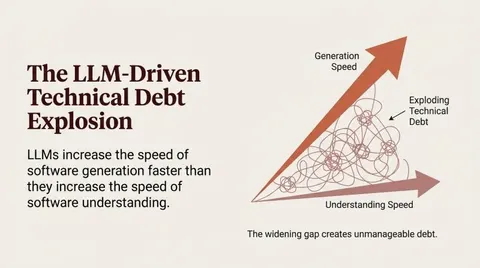
Gavin Mendel-Gleason reports that opencode, GPT-5.2 and lean-lsp-mcp produced a provably correct citation streaming program for a RAG answering system in two hours with no interventions. Gavin Mendel-Gleason argues that LLMs increase software generation faster than software understanding, and calls the approach vericoding (vibe-coding using programme verification).

Image: linkedin.com

Checked against: LinkedIn post

Papers and events

Stan Fedotov compares two AI-assisted math papers, one checked in Lean

In a LinkedIn post, Stan Fedotov argues the field is "moving towards automated verification in most domains," while noting Lean is "only useful when the standard library supports your field." In one paper, only a somewhat elementary part of the proof was verified in Lean, while the authors proved the deeper parts.

Image: linkedin.com

Checked against: LinkedIn post

Lean core

Leo de Moura merges three Lean core changes to instance handling

Lean now identifies instance parameters by type using isClass? instead of binder syntax, dsimp no longer simplifies instances by default, and isDefEq no longer raises transparency to .default for implicit arguments, a change the PR calls very disruptive. Old behavior is available through backward.* options, and the PRs cite problems in Mathlib.

Checked against: lean4#12172lean4#12195lean4#12179

Lean core

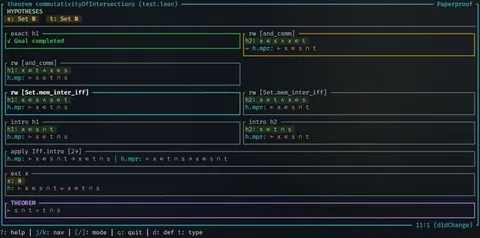
Willem Vanhulle builds a terminal user interface for Lean 4 users

Willem Vanhulle is putting together a TUI (a terminal-only user interface) for Lean4 users, built with Ratatui. The TUI has several display modes with different display styles for on-going mathematical proof development, and documentation is available.

Image: linkedin.com

Checked against: LinkedIn post

Papers and events

Leo de Moura presents The State of Lean at Lean Together 2026

Leo de Moura, Chief Architect of the Lean FRO, reviewed 2025 at Lean Together in January 2026: 12 releases, a new compiler fully implemented in Lean, and the grind proof-automation tactic. The talk also said 2026 will be the last year with significant changes to the language and standard library.

Checked against: slides (pdf)

Lean core

Lean repository adds SymM symbolic simulation benchmark from Lean@Google Hackathon

A new benchmark in the lean4 test suite, described as a synthetic benchmark from the Lean@Google Hackathon, compares a MetaM tactic solution with SymM solutions, including a "SymM Solution + reusing simplifier cache" variant, on generated command sequences of up to 700 iterations, also timing kernel checking.

Checked against: leanprover/lean4

Verification

Ilya Sergey shows how to verify imperative Lean 4 programs with Velvet

A Proofs and Intuitions post walks through Velvet, a verifier embedded in Lean as a library and developed by VERSE Lab. Velvet discharges most proof obligations with SMT solvers (such as Z3 and cvc5) and tactics like grind, then leaves the rest for interactive proof. In the example, Claude Code and Harmonic's Aristotle each finished the remaining proof.

Checked against: proofsandintuitions.net

AI and formalization

Project Numina announces Numina-Lean-Agent, an open-source theorem-proving framework

Yann Fleureau announced Numina-Lean-Agent, an open-source agentic framework for autoformalization and theorem proving using generic AI models. The announcement reports 12/12 on Putnam 2025 and a formalization of the "Effective Brascamp-Lieb inequalities" research paper, more than 90% of it AI-generated.

Image: linkedin.com

Checked against: LinkedIn post

Papers and events

Alexandre Rademaker teaches Programming with Proofs using Lean at Universidade de Aveiro

Alexandre Rademaker says the course is probably the first Lean course taught in Portugal and is an official World Logic Day 2026 event. It uses The Hitchhiker's Guide to Logical Verification and is partly supported by Atlas Computing via a Schmidt Sciences grant.

Checked against: LinkedIn post

Papers and events

Martin Ciupa summarizes Tom Kalil's interview with Terence Tao on AI in math

In a LinkedIn post, Martin Ciupa recaps the conversation, in which Terence Tao calls automating formalization (turning ordinary math into proof-assistant-checked form) the near-term change, stresses formal verification over trusting AI blindly, and highlights Lean-style autocomplete that fills a line or two at a time.

Image: linkedin.com

Checked against: LinkedIn post

AI and formalization

Axiom's AxiomProver solves all 12 Putnam problems with Lean proofs

AxiomProver, an autonomous AI theorem prover built by Axiom, solved 12 out of 12 problems from the Putnam Competition, 8 of them within the strict exam time limit, producing formal proofs in Lean. One combinatorial step in Problem A5 required 2,054 lines of formal proof.

Image: linkedin.com

Checked against: LinkedIn post

Lean core

Sebastian Ullrich proposes bundling Lean's Init library into one .olean file

A pull request by Sebastian Ullrich bundles all Init module files into a single file with cross-sharing, reducing cumulative size from 325MB to 264MB and openat calls for import Init on Linux from about 2000 to about 80. The pull request is still open.

Checked against: lean4#11965

AI and formalization

Hacker News discusses Erdos problem #728 solved largely autonomously by AI

A Hacker News thread on the claim that Erdos problem #728 "was solved more or less autonomously by AI" drew 619 points and 363 comments. A Harmonic employee said Aristotle, the company's system, can translate an informal English proof into Lean, and commenters debated how to check that a theorem statement is formalized correctly.

Checked against: news.ycombinator.com

Papers and events

Lean Community holds Lean Together 2026 virtually via Zoom, January 19 to 23

Lean Together is an annual meeting for users, developers, and fans of the Lean programming language and theorem prover, covering formalized mathematics, software verification, infrastructure, and outreach. The meeting is open to everyone without cost, and talks will be recorded with speakers' permission and posted to the leanprover community YouTube channel.

Checked against: leanprover-community.github.io

Lean core

Leo de Moura removes super-linear kernel overhead in lambda simplification

A merged Lean pull request by Leo de Moura improves the proof term produced by mkFunext, which Sym.simp uses when simplifying lambda expressions. For a 200-lambda benchmark, kernel checking time fell from 148.681 ms to 6.903 ms, and the approach will later come to Meta.simp.

Checked against: lean4#11932

Papers and events

Math, Inc. releases full conversation with Terry Tao on mathematics' future

Math, Inc. posted a full conversation in which Fields medalist Terry Tao sits down with Math Inc's @jessemhan and @jdlichtman to discuss the future of mathematics. Terry Tao says this style of writing proofs shows the inputs and outputs of a proof more clearly and predicts that "the definition of a mathematician will broaden."

Image: x.com/mathematics_inc

Checked against: @mathematics_inc on X

Verification

Logical Intelligence shares AI-generated verified λ-calculus to CPS compiler in Lean

Logical Intelligence posted on X an AI-generated, formally verified compiler from λ-calculus to CPS, written in Lean4. The post explains formal verification as code that comes with a mathematical proof, checked by the computer, that it works correctly in all cases, not just the ones tested.

Checked against: @logic_int on X