Weekly

News about Lean, the theorem prover and programming language.

Papers and events, page 2

Papers, talks, courses, events, funding, and press. 53 items, newest first.

Papers and events

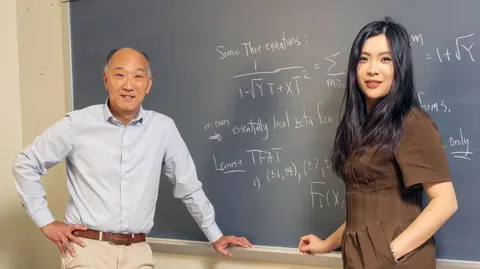
Nathanson publishes recording of talk about Aristotle's solutions

Nathanson has published the recording of a talk about Aristotle's solutions to problems, including the remark "I tried to figure out what it did that I didn't do to solve the problems." Pietro Monticone shared the video on X.
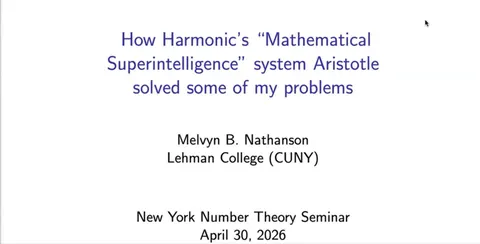
Image: x.com/pietromonticone

Checked against: @pietromonticone on X

Papers and events

Leo de Moura presents machine-checked mathematics talk at Stanford symposium

Leo de Moura, Chief Architect of the Lean FRO, spoke on "Machine-Checked Mathematics in the Age of AI" at the Stanford Future of Mathematics Symposium on May 1, 2026. The slides, written in Verso, cover Mathlib's 270,000+ formalized theorems, Verso Blueprint, Comparator (a judge for Lean proofs), and Lean-based IMO medal AIs.

Checked against: leodemoura.github.io

Papers and events

Leo de Moura presents scalable software verification in Lean at SViL 2026

At SViL 2026 at INRIA Paris on April 20, 2026, Leo de Moura presented SymM, a monad for symbolic simulation and VC generation (turning code and specifications into proof obligations). On one challenge it ran about 100× faster than MetaM, and a Velvet port beat Dafny on 24 of 27 benchmarks.

Checked against: leodemoura.github.io

Papers and events

Stanford hosted the Future of Mathematics Symposium on AI and formal methods

The symposium, held May 1-2, 2026, opened with Leo de Moura of Amazon speaking on "Machine-Checked Mathematics in the Age of AI." Other talks included Clark Barrett on CSLib, a platform for AI-assisted formal verification in Lean, Kevin Buzzard on autoformalisation, and Maryna Viazovska on formalizing the sphere packing problem.

Image: events.stanford.edu

Checked against: events.stanford.edu

Papers and events

Software Verification in Lean 2026 workshop recordings now available

Talks from the one-day workshop at INRIA Paris on April 20, 2026 are on YouTube, including a talk presenting SymM, a new monadic framework for high-performance verification tools built on Lean, Son Ho on SymCrypt, and Karthikeyan Bhargavan on verifying cryptographic applications. Derek Sorensen's talk was not recorded, and slides were provided instead.

Checked against: beneficial-ai-foundation.github.ioleodemoura.github.io

Papers and events

Leo de Moura explains in a blog post why Lean works

In "Why Lean?", dated 2026-04-02, Leo de Moura argues that implementing Lean in Lean lets users extend it freely, and points to a small trusted kernel with multiple independent implementations. The post also names backward compatibility as Lean's weakness: Lean code written two years ago probably needs changes to compile today.

Checked against: leodemoura.github.io

Papers and events

Leo de Moura publishes blog post "Why Lean?"

In a post dated 2026-04-02, Leo de Moura argues that Lean's implementation in Lean itself underpins its extensibility, scalability, and soundness through a small trusted kernel. The post also names backward compatibility as Lean's weakness: code written two years ago probably does not compile today without changes.

Checked against: leodemoura.github.io

Papers and events

Leo de Moura presents Lean talk at the University of Minnesota

Leo de Moura (AWS, Lean FRO) gave the talk "Lean: Machine-Checked Mathematics and Verified Programming" on March 30, 2026. The slides describe a general-purpose AI converting zlib (a C compression library) to Lean and proving the code correct, plus grind, a proof-automation tactic inspired by modern SMT solvers.

Checked against: leodemoura.github.io

Papers and events

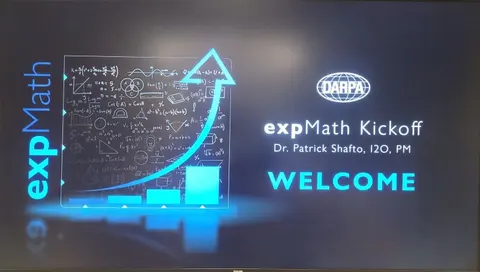
DARPA held the kickoff meeting for its Exponentiating Mathematics (expMath) program

Patrick Shafto reported that the DARPA expMath kickoff included teams from CMU, Stanford, MIT, UCLA, Princeton and other universities, plus a panel of community supporters including Leo de Moura and the Lean FRO community, and Adam Topaz and the Mathlib Initiative.

Image: linkedin.com

Checked against: LinkedIn post

Papers and events

Blog post argues Lean 4 is the greatest theorem prover

In "Lean 4 is the Greatest to Ever Do It", the author implements a small garbled-circuit evaluator using point-and-permute in Lean. The project combines a macro-based circuit syntax, OpenSSL bindings through Lean's C interface, imperative-style code, and a proof that the serializer behaves properly.

Checked against: markusde.ca

Papers and events

Leo de Moura presents Lean 4 at NASA Formal Methods Symposium

Leo de Moura, Chief Architect of the Lean FRO, presents "Lean 4: A Unified Platform for Programming and Verification" at the NASA Formal Methods Symposium on May 6, 2026. The talk covers grind, Lean's new proof automation, and industry verification work including Cedar, SampCert, and SymCrypt.

Checked against: leodemoura.github.io

Papers and events

Leo de Moura surveys industrial and AI uses of Lean at ETAPS 2026

Leo de Moura gave an ETAPS tutorial on April 13, 2026, then an ETAPS Industry Day talk on April 15 covering Cedar (access control), SampCert (privacy), Strata (languages), Waimea (compiler), SymCrypt (crypto), Anneal (unsafe Rust) and Veil (distributed protocols), plus AI provers for which Lean is the training environment, evaluation harness, and deployment target.

Checked against: leodemoura.github.io

Papers and events

Leo de Moura explains how independent kernels protect Lean from prover bugs

In the blog post "Who Watches the Provers?", Leo de Moura notes that Claude (Opus 4.6) found seven kernel bugs in Rocq and two in Nanoda, a Lean proof checker written in Rust, but no proof of false in Lean's official kernel. The Lean Kernel Arena tests 7 kernels against 133 benchmarks.

Checked against: leodemoura.github.io

Papers and events

Menlo Ventures leads Axiom's $200 million Series A for Verified AI

Menlo Ventures announced it is leading a $200 million Series A for Axiom at a $1.6 billion post-money valuation. Axiom trains systems to produce formally verified outputs in Lean, and Menlo Ventures describes the bet as one that Verified AI is a new paradigm.

Image: menlovc.com

Checked against: menlovc.com

Papers and events

Axiom raises $200 million to verify AI-generated code with Lean

Axiom Quant's Series A round, led by Menlo Ventures, values the startup at $1.6 billion. Axiom trains AI systems to generate formally verified outputs in Lean and plans to scale its training infrastructure and expand its team of math experts.

Image: siliconangle.com

Checked against: siliconangle.com

Papers and events

Renaissance Philanthropy and XTX Markets add $13.5 million to AI for Math Fund

The new commitment brings the AI for Math Fund total to $31.5 million, with grants ranging between $100,000 and $1 million to support 12-24 months of work. Applications close on March 30, 2026 at 11:59 pm PT.

Image: renaissancephilanthropy.org

Checked against: renaissancephilanthropy.org

Papers and events

Emilio Jesús Gallego Arias built a Lean DSL debugger with GPT-Codex 5.3

In the blog post "Vibe-coding a debugger for a DSL", Joachim Breitner describes a small language embedded in Lean with a visual debugger in Lean's Info View and VSCode debugger support via the DAP protocol, built in one day of coding with GPT-Codex 5.3.

Checked against: joachim-breitner.de

Papers and events

Stephen Diehl tests Opus 4.6 on a category theory library in Lean

Stephen Diehl built Kitty Cats, about 900 lines of Lean, with Anthropic's Opus 4.6 over two 30-minute sessions. The model handled the Yoneda lemma but needed guidance on multi-step rewrites and on refactoring verbose proofs. Diehl credits the lean-lsp-mcp server and the lean4-skills plugin for giving the model a feedback loop.

Image: stephendiehl.com

Checked against: stephendiehl.com

Papers and events

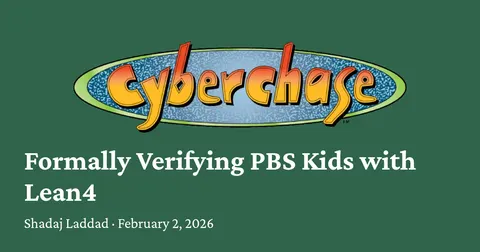
Blog post formally models a Cyberchase episode's dragon game in Lean

A post on shadaj.me, "Formally Verifying PBS Kids with Lean4," uses Lean to model the Cyberchase episode "Problem Solving in Shangri-La," a variant of Nim where players remove 1, 2, or 3 dragons. It proves the Cybersquad's poison-number strategy wins, introducing tactics such as rw, simp, split, and omega along the way.

Image: shadaj.me

Checked against: shadaj.me

Papers and events

Stan Fedotov compares two AI-assisted math papers, one checked in Lean

In a LinkedIn post, Stan Fedotov argues the field is "moving towards automated verification in most domains," while noting Lean is "only useful when the standard library supports your field." In one paper, only a somewhat elementary part of the proof was verified in Lean, while the authors proved the deeper parts.

Image: linkedin.com

Checked against: LinkedIn post

Papers and events

Leo de Moura presents The State of Lean at Lean Together 2026

Leo de Moura, Chief Architect of the Lean FRO, reviewed 2025 at Lean Together in January 2026: 12 releases, a new compiler fully implemented in Lean, and the grind proof-automation tactic. The talk also said 2026 will be the last year with significant changes to the language and standard library.

Checked against: slides (pdf)

More news